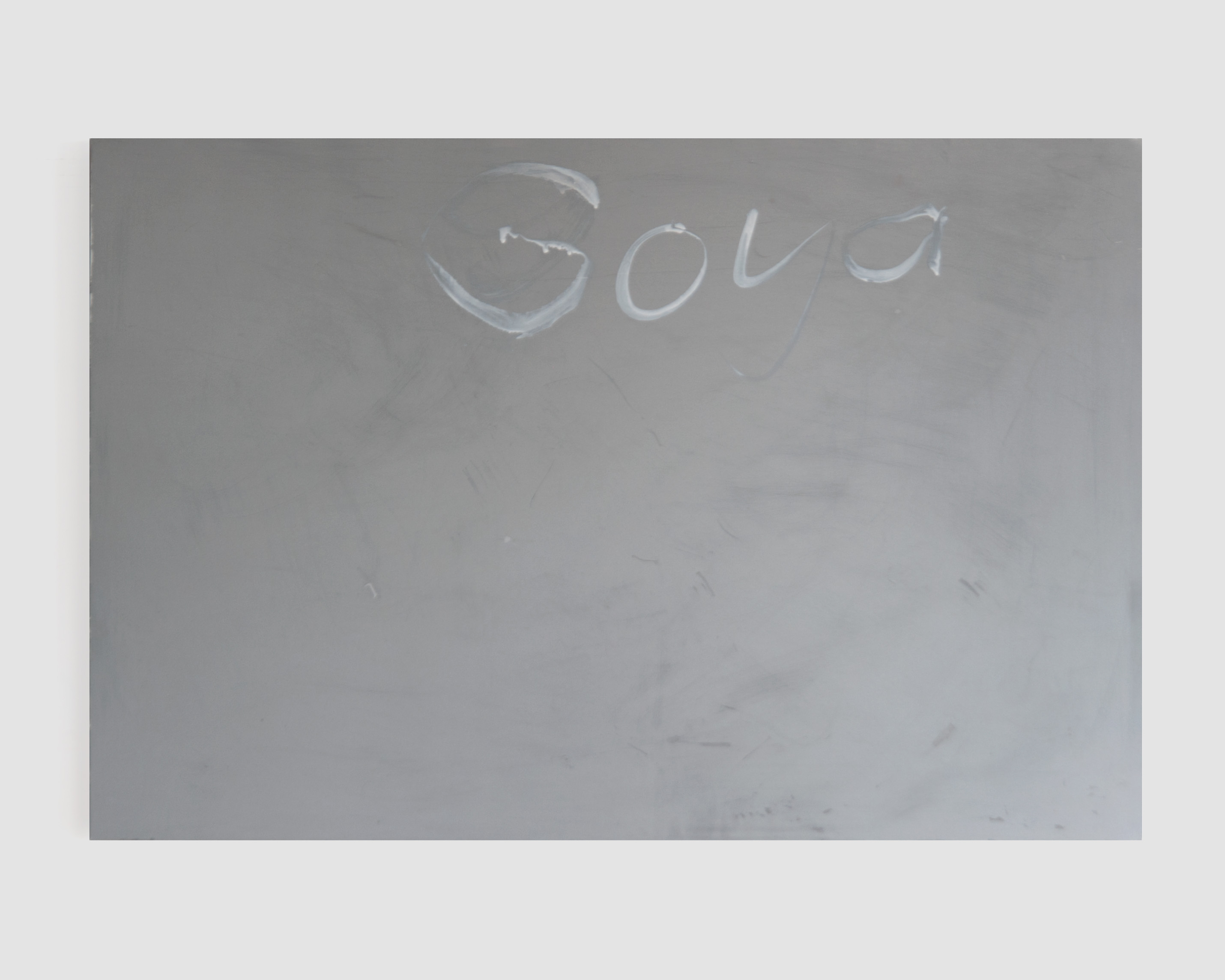
In the exhibition “Steam from the train is part of an eye that pulls the engine”, Tim Ayres’s first solo presentation with m.simons, one painting simply reads: ‘Goya.’ The name of the 18th-century Spanish painter Francisco Goya is rendered in loose, white handwriting across a scuffed aluminium surface. The gesture appears casual, almost indifferent, yet carries a quiet precision—an invocation as much as a mark.
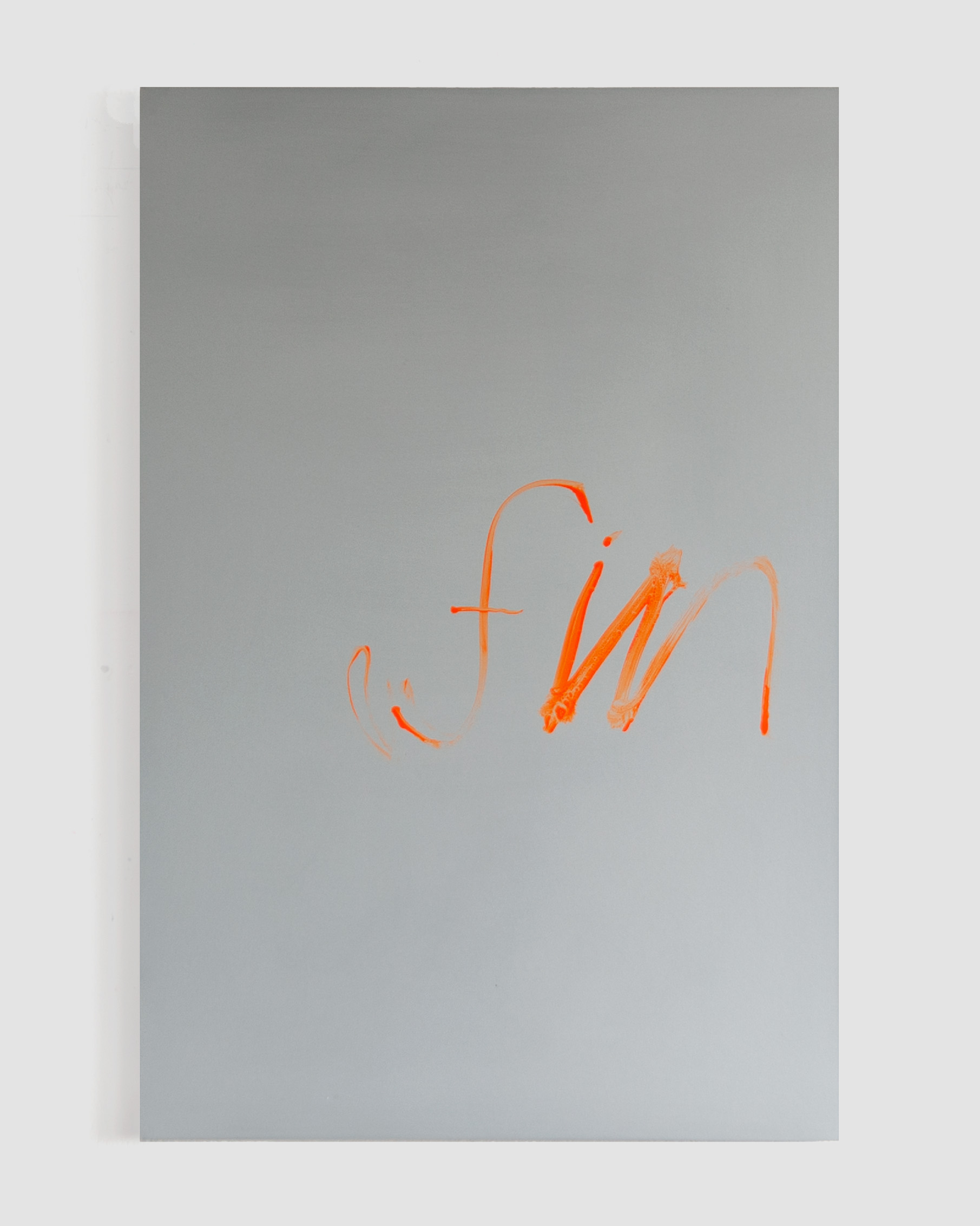
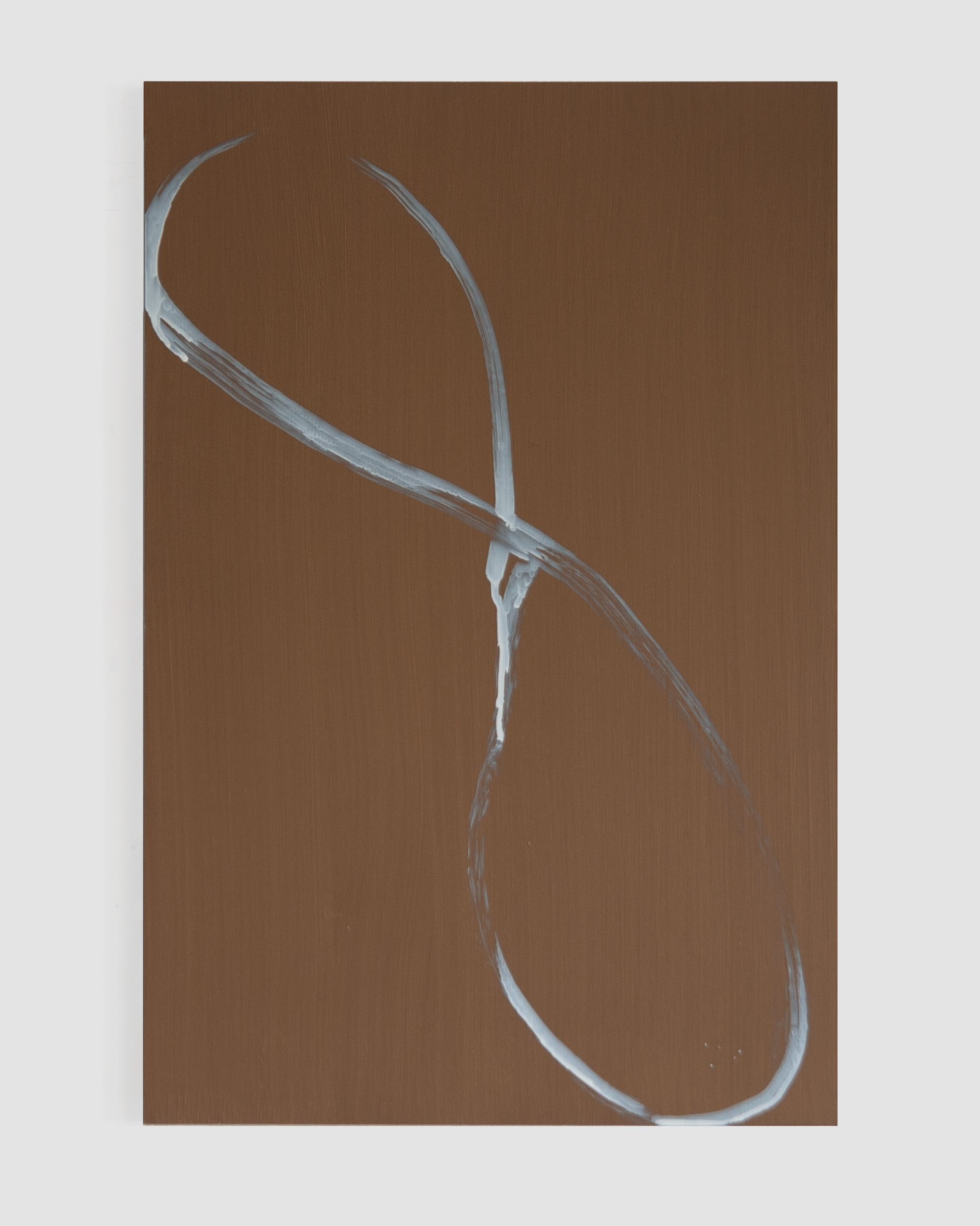
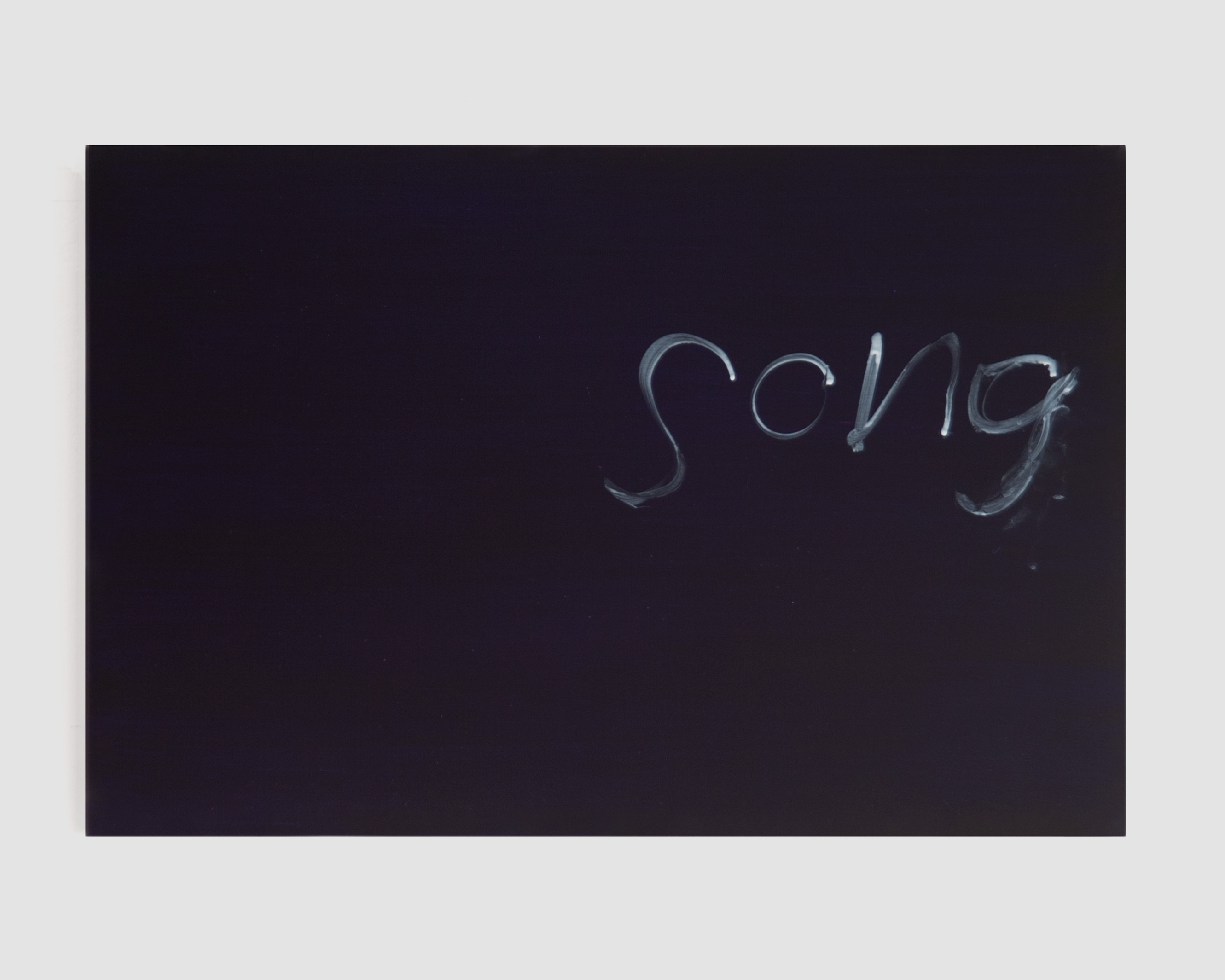
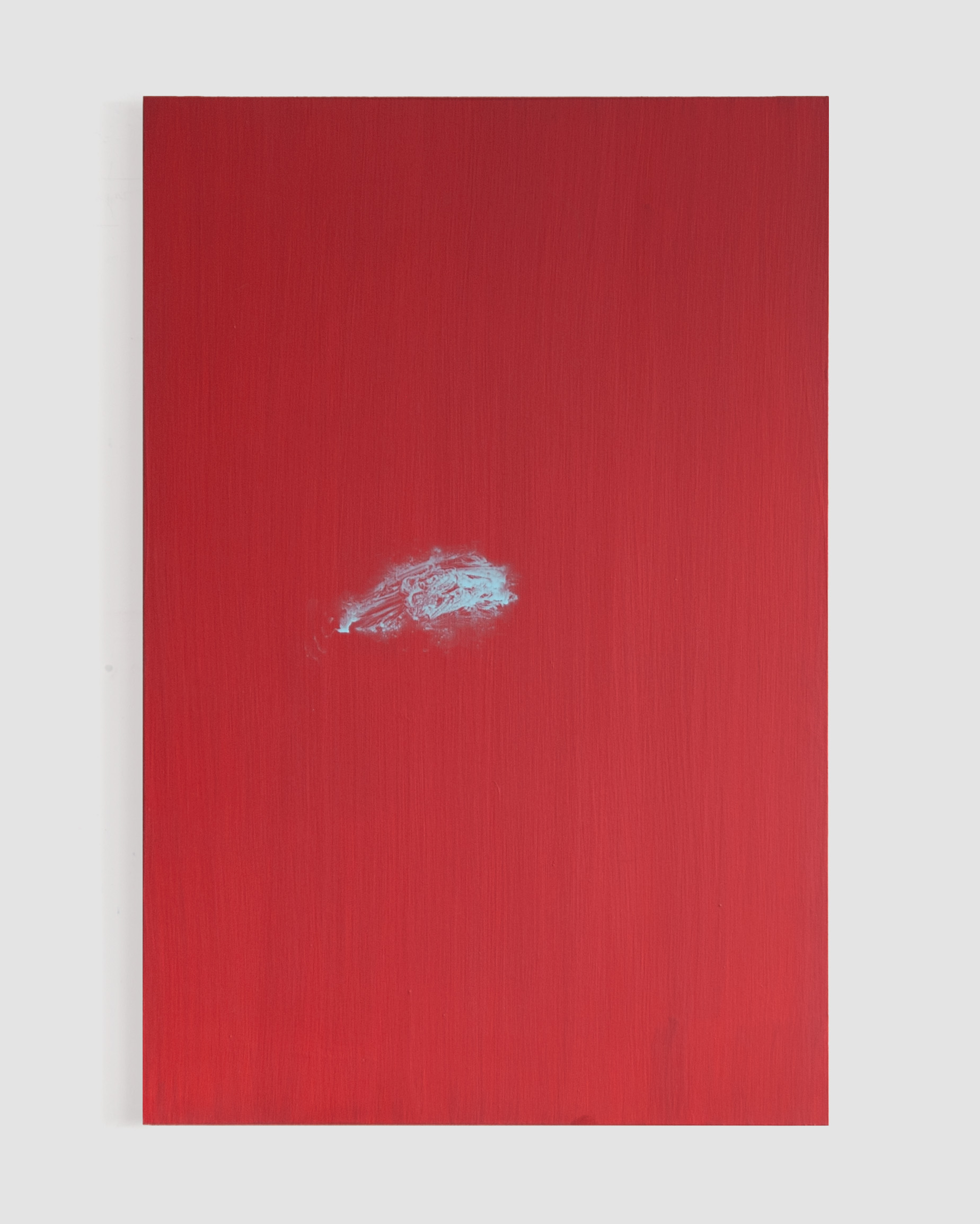
The exhibition consists of a selection of paintings with handwritten texts, alongside a single simple painting of an infinty symbol and The Bay of Naples, a painting that involves nothing more than a solitary smudge of paint. The works, painted on an alumium-faced panel, are modest in scale and have an intimacy - none exceed 90 cm in height or width. Despite their restraint, the works assert a distinct presence, balancing immediacy with a measured sense of placement.
Ayres’s oeuvre spans nearly four decades. In the late 1980s and 1990s, he became widely known for his Eurostile-font paintings—bold, declarative works bearing words such as sex, war, mother or debonaire, alongside post-modernist references to the modernist use of the grid. Over time, this directness shifted. Later works introduced images of clouds, roads, and two-tone portraits, while text itself softened into something more poetic, more tentative, and often times more introspective.
A constant through this evolution is a sense to succinctness. Whether text, symbol, or image, Ayres presents his subjects in full—never as fragments of a larger, unseen whole. These works do not function as windows onto elsewhere; they do not invite speculation about what lies beyond the frame. Instead, they are their own completeness: this is what is here, nothing more, nothing less.
To encounter an Ayres painting, then, is to approach it as one might a minimalist work. Meaning does not unfold through narrative, symbolism, or expressive excess, but through the interplay of material, colour, surface, and scale. Within this framework, text, form, and symbol operate not as carriers of external meaning, but as intrinsic elements—qualities among others, active within the internal logic of the painting. If colour holds emotive force and scale commands physical presence, then text, in Ayres’s work, assumes a lyrical function, a glance of suggestion.
Ayres came late to Goya. On a recent visit to Madrid Ayres was drawn to his portraits of the Spanish nobility at the Prado Museum in Madrid. Ayres was struck and surprised by their balance: a precise, classical depiction combined with attentive overall brushwork, punctuated by rough, almost abrupt strokes that register a glint of light or the texture of a garment. At first glance, these gestures suggest nonchalance, clumsiness even; Ayres sees this as a certain eccentricity in painting, something that he took back to his studio, informing a shift from the hard-edge control of stencils to the fluidity of his free hand.
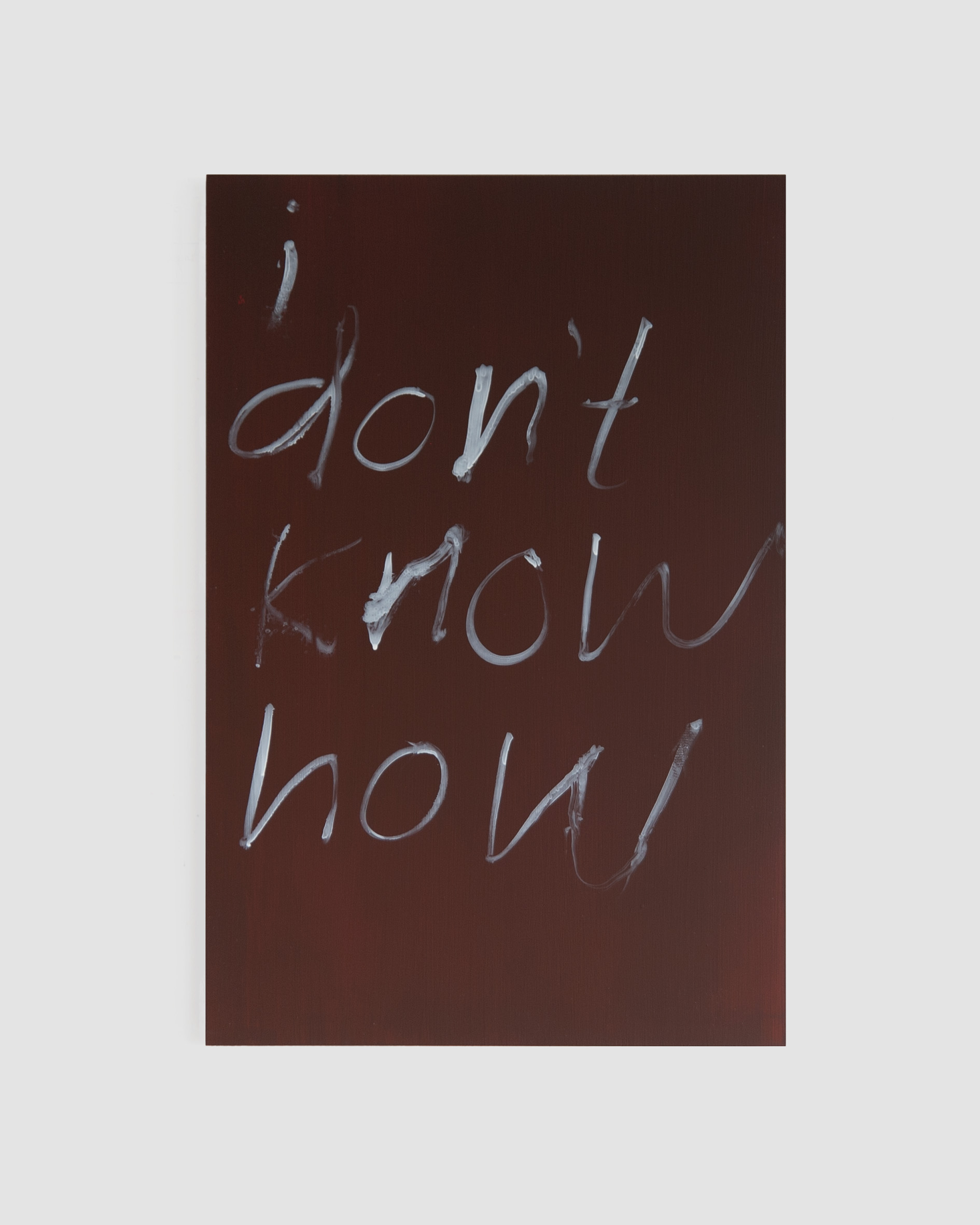
The current body of work, developed over the past two years, suggests this sense of balance and surprise. Drawn words and symbols possess a deliberate quality in their placement, form, and colour, but resist any determination. The F in Fin (2026) functions as a cross at the centre of the painting, anchoring the gesture of the rest of the short word, whilst the echo of the w’s in I don’t know how (2026) carry such a rhythmic charge that suggests a sense of visual purpose and a fleetingness, concurrently.
Then again, as anyone who has ever written or drawn knows, there is a particular pleasure in forming a perfect s, o, square, or number 8. These small moments of satisfaction recur throughout Ayres’s work. Placed with apparent ease yet exacting care, they attain an aesthetic clarity that feels both incidental and precise—something discovered as much as it is made, by artist and viewer alike.
In this way, Ayres’s paintings arrive at a quiet but assured resolution. Balancing intention and immediacy, precision and apparent nonchalance, each work presents itself fully while retaining the trace of its making. What emerges is are surprising and alluring paintings, grounded in reduction rather than expansion, where meaning is not imposed but allowed to surface—held in a form that is both complete and distinctly present.