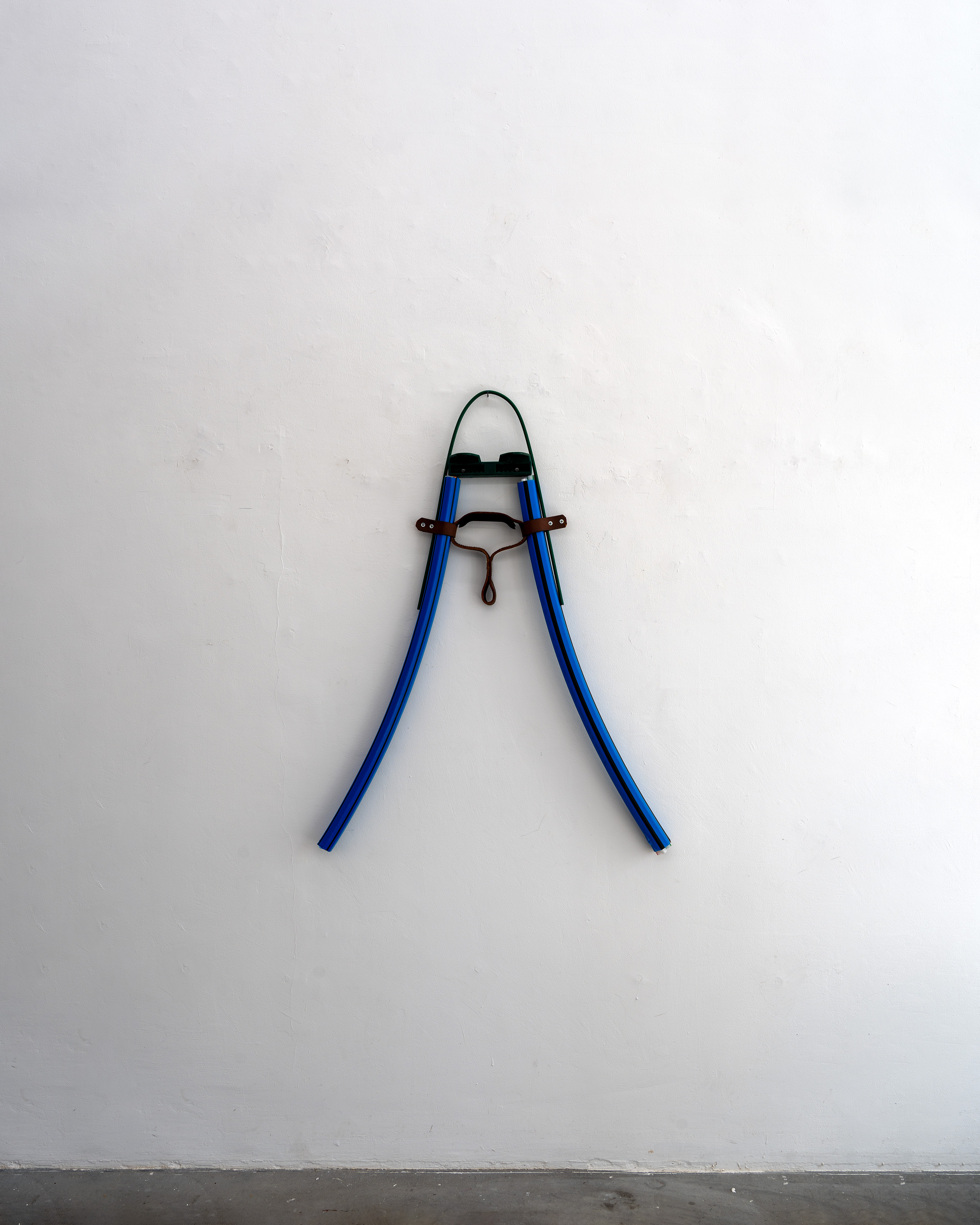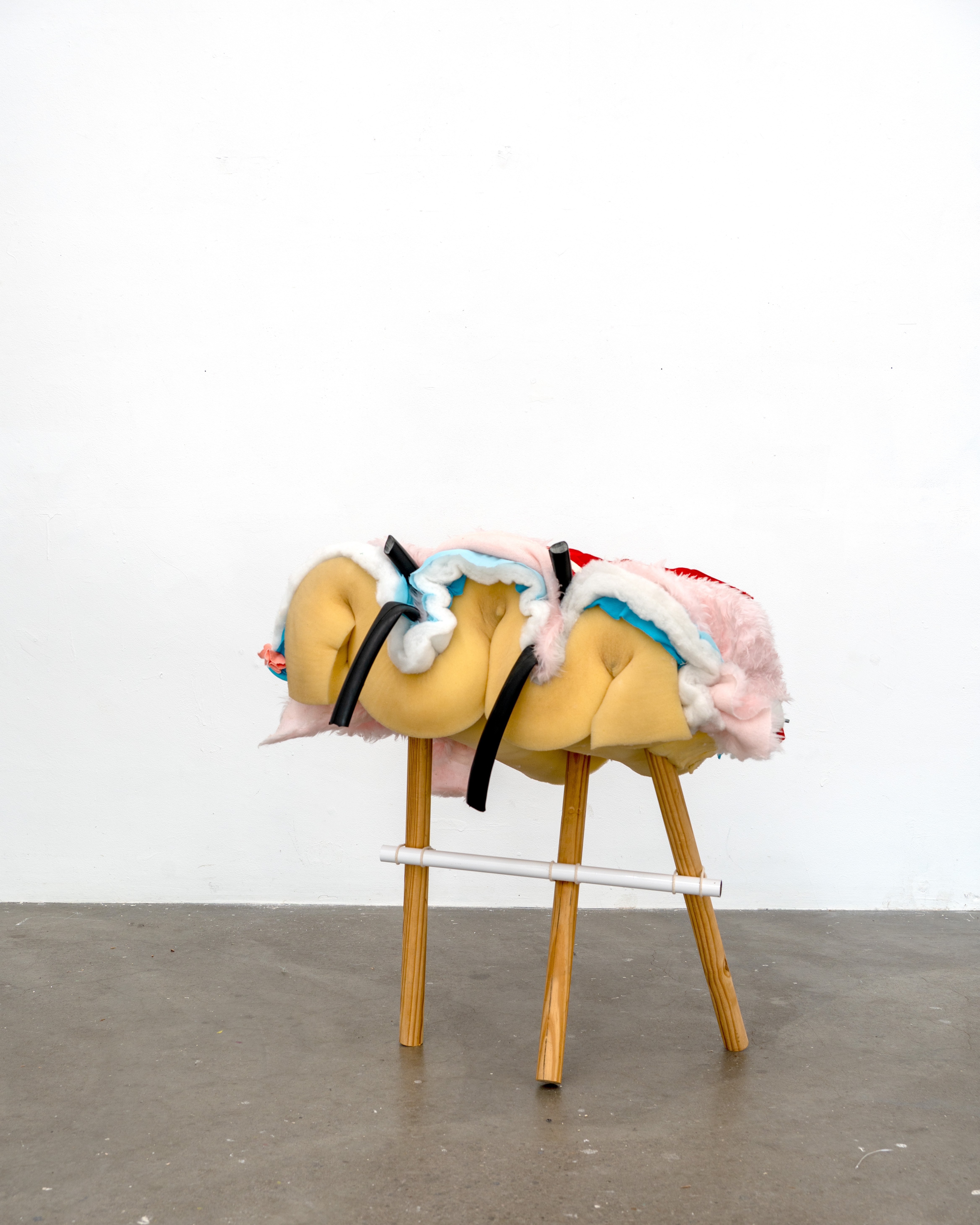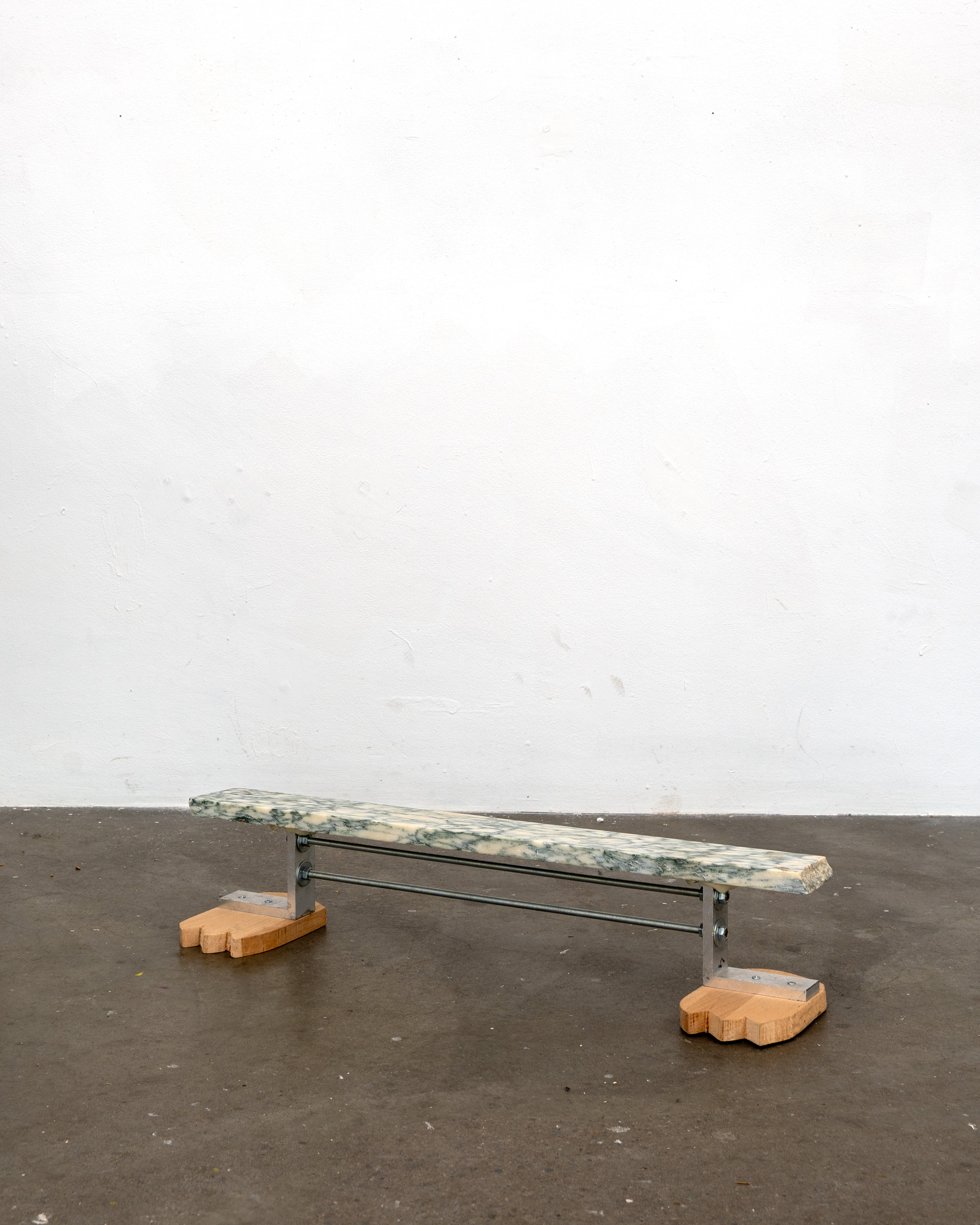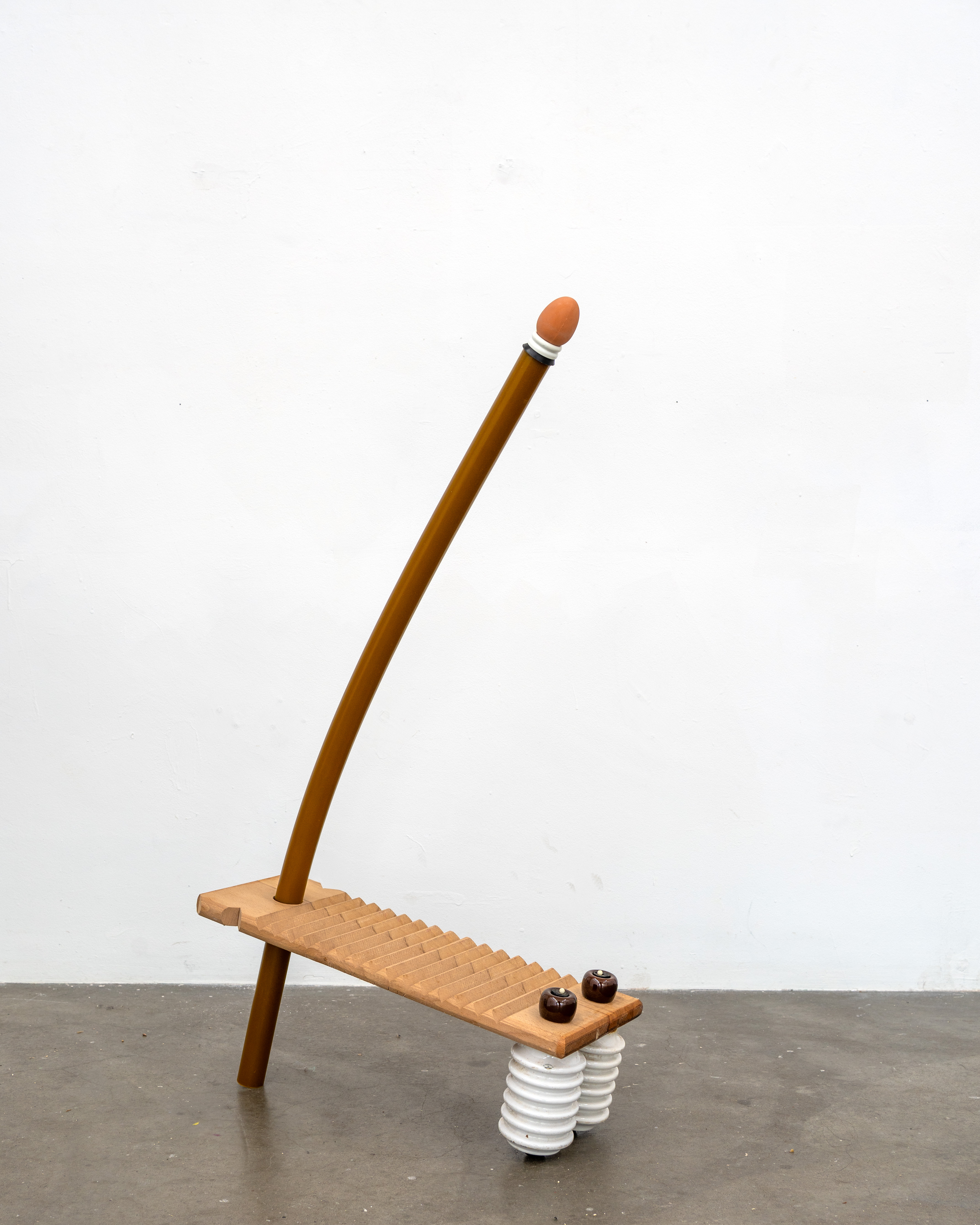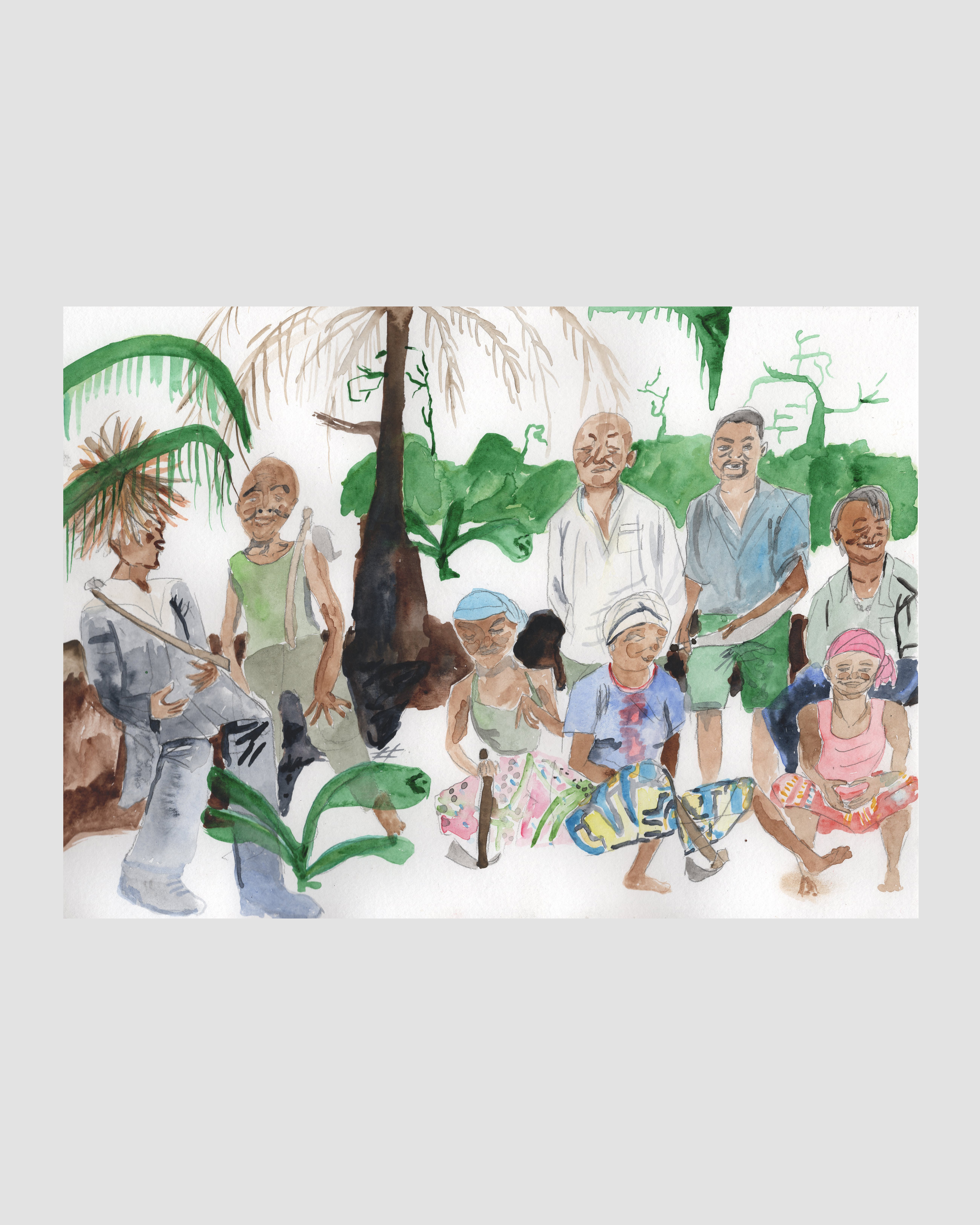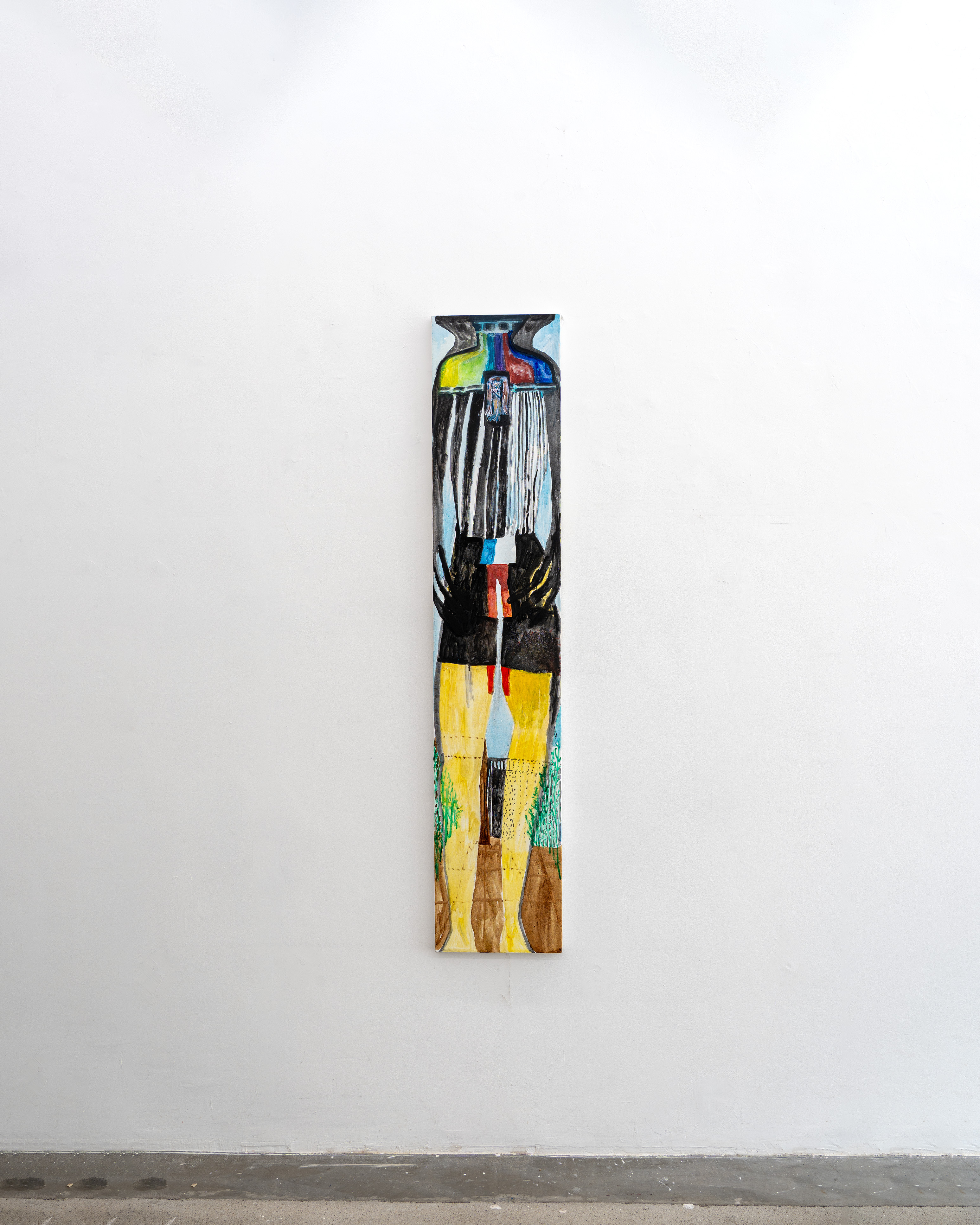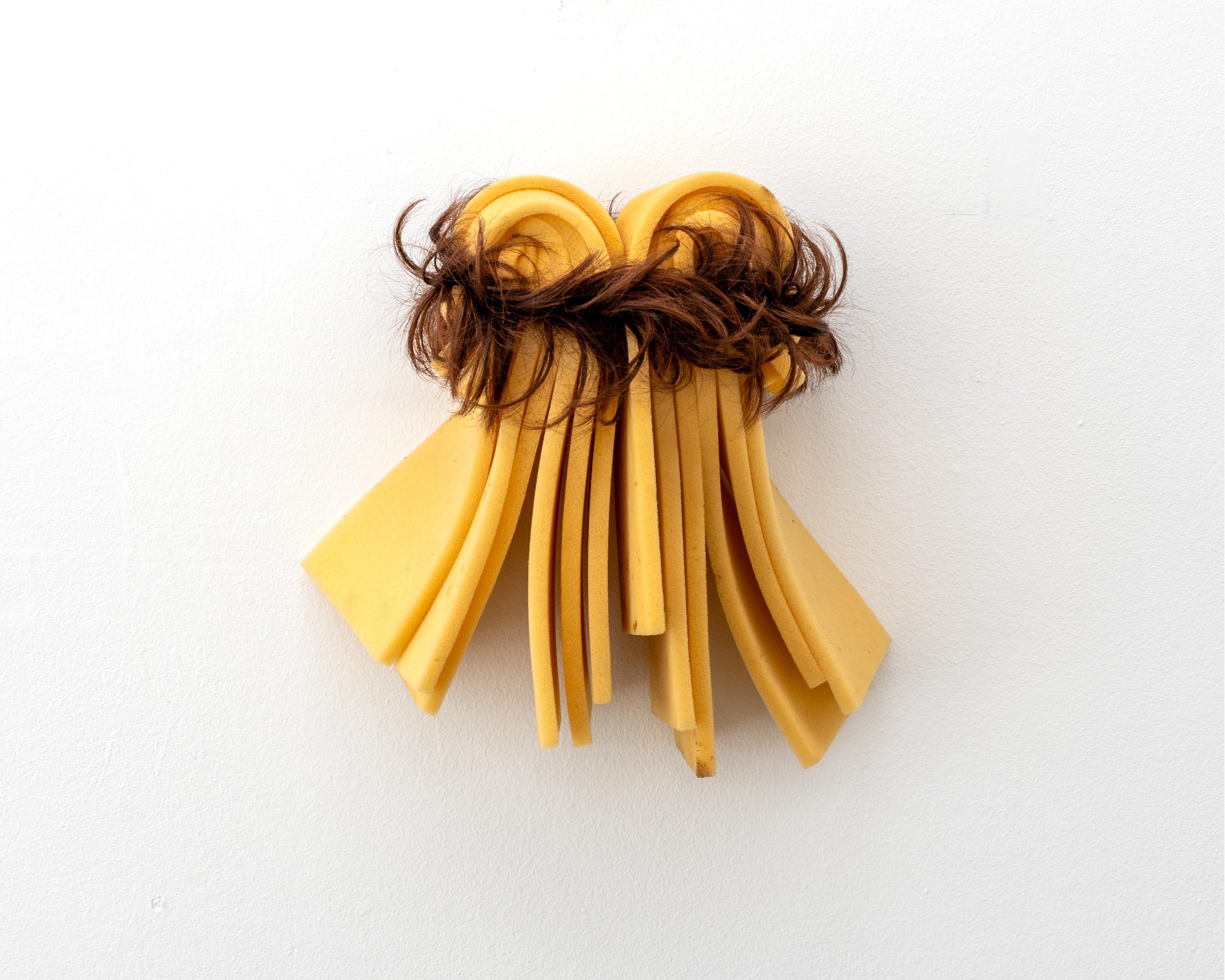
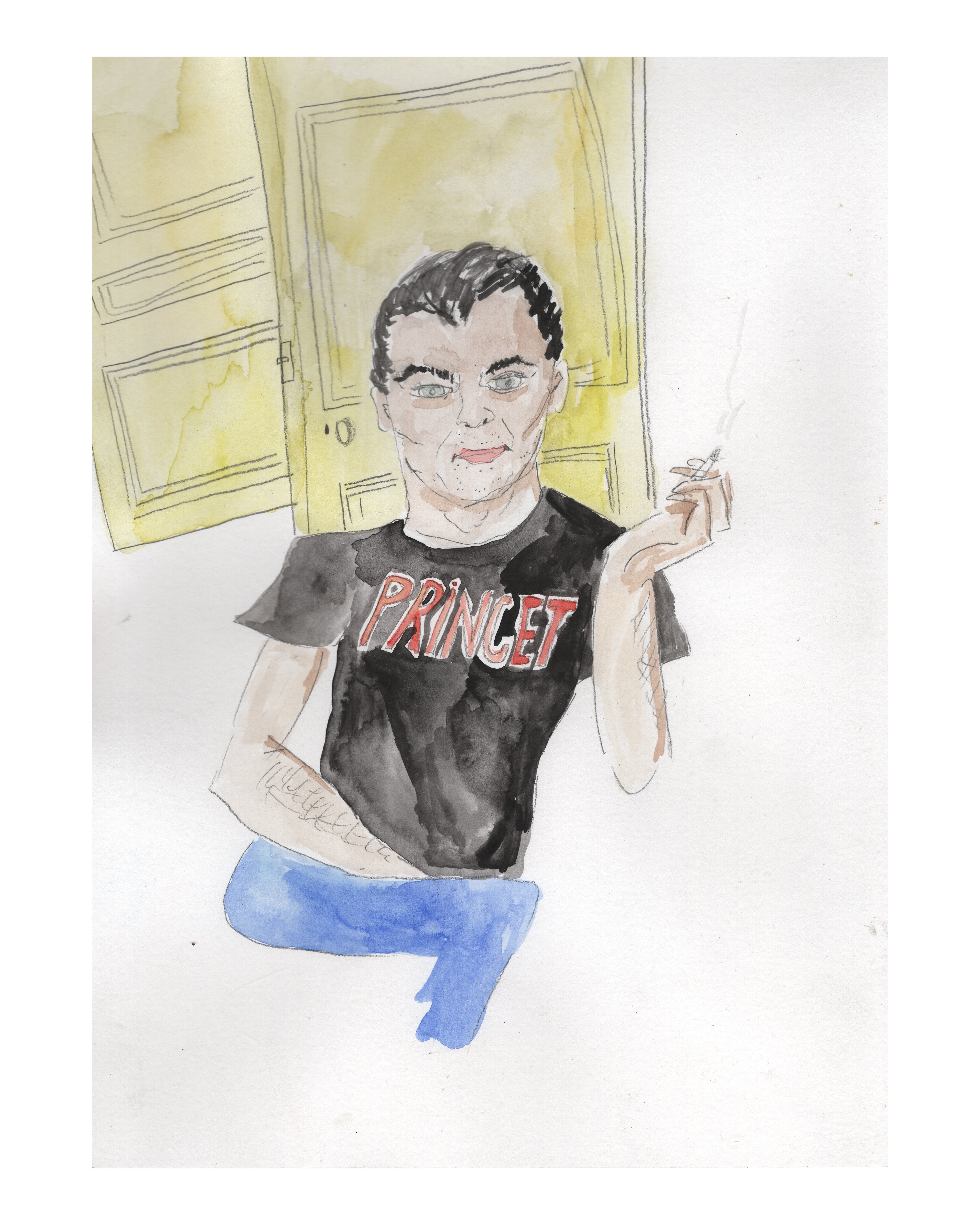
Be There or Be Square’, the title of this duo exhibition, means: be there, or you’ll be a loser. It refers to the inner struggle we all experience from time to time, a tension between FOMO (fear of missing out) and FOBI (fear of being in). The tension between being an introvert or an extrovert. But what should you really have FOMO about? An opening like this one? Or watching a spider carefully weaving its web somewhere in a dark corner?
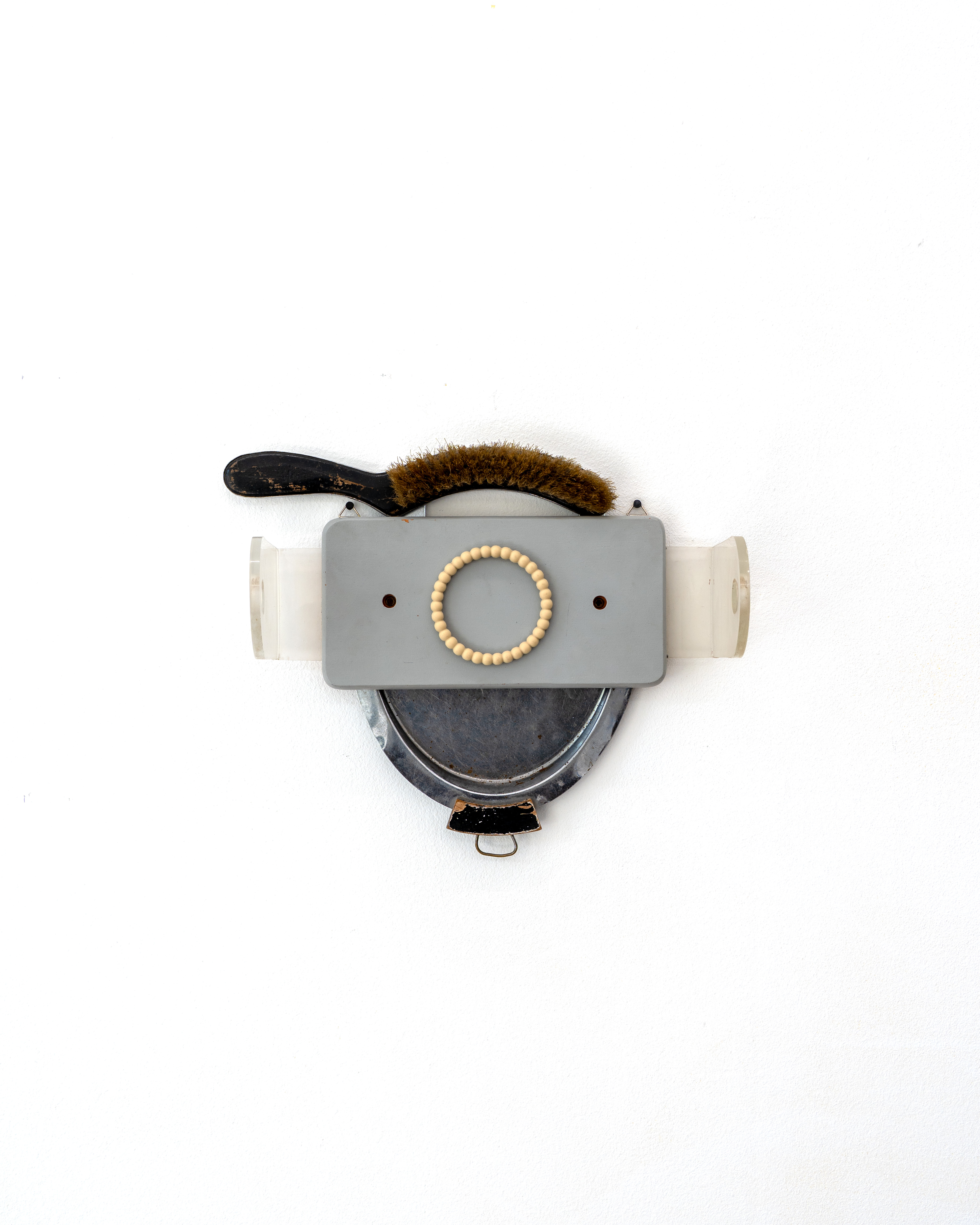
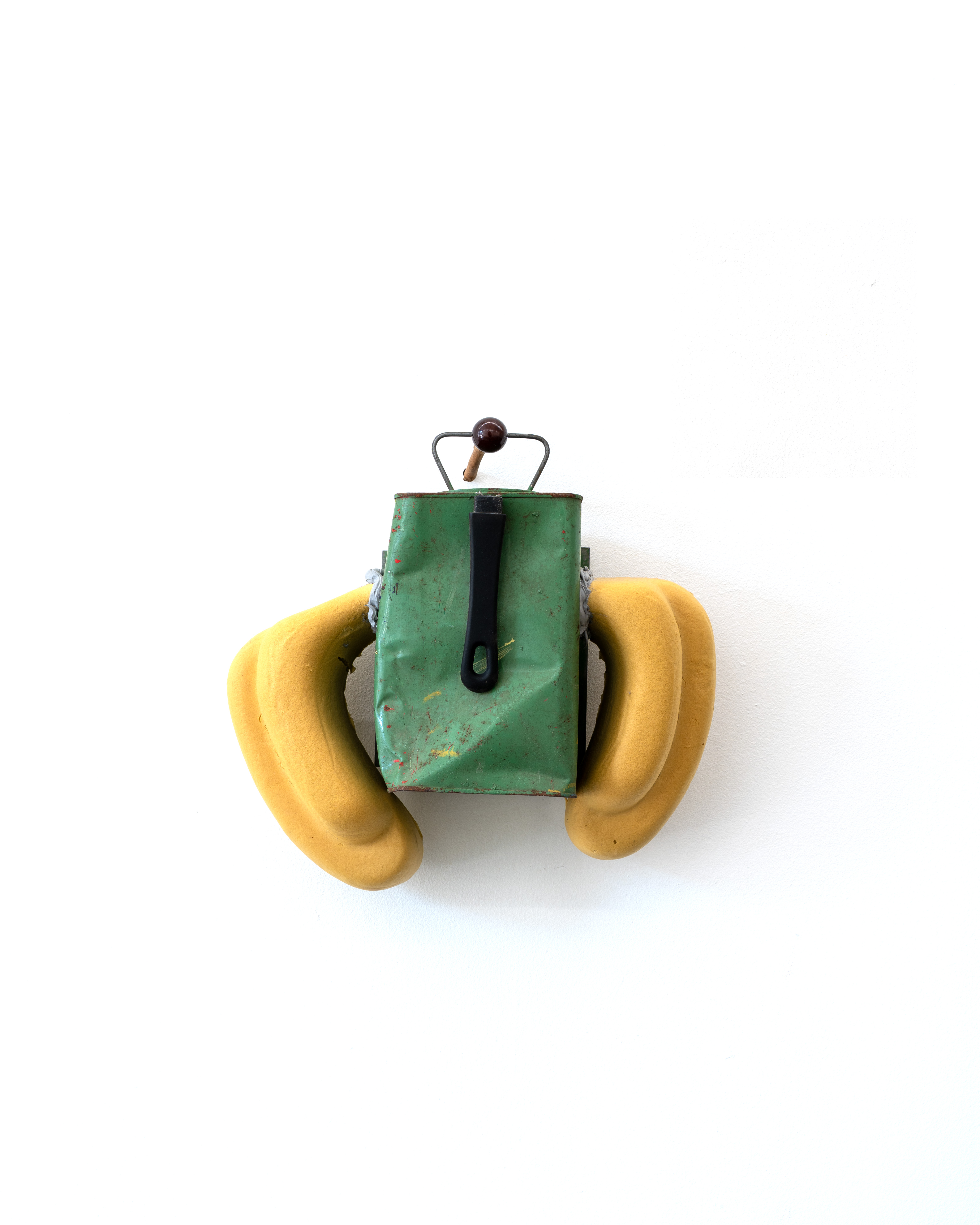
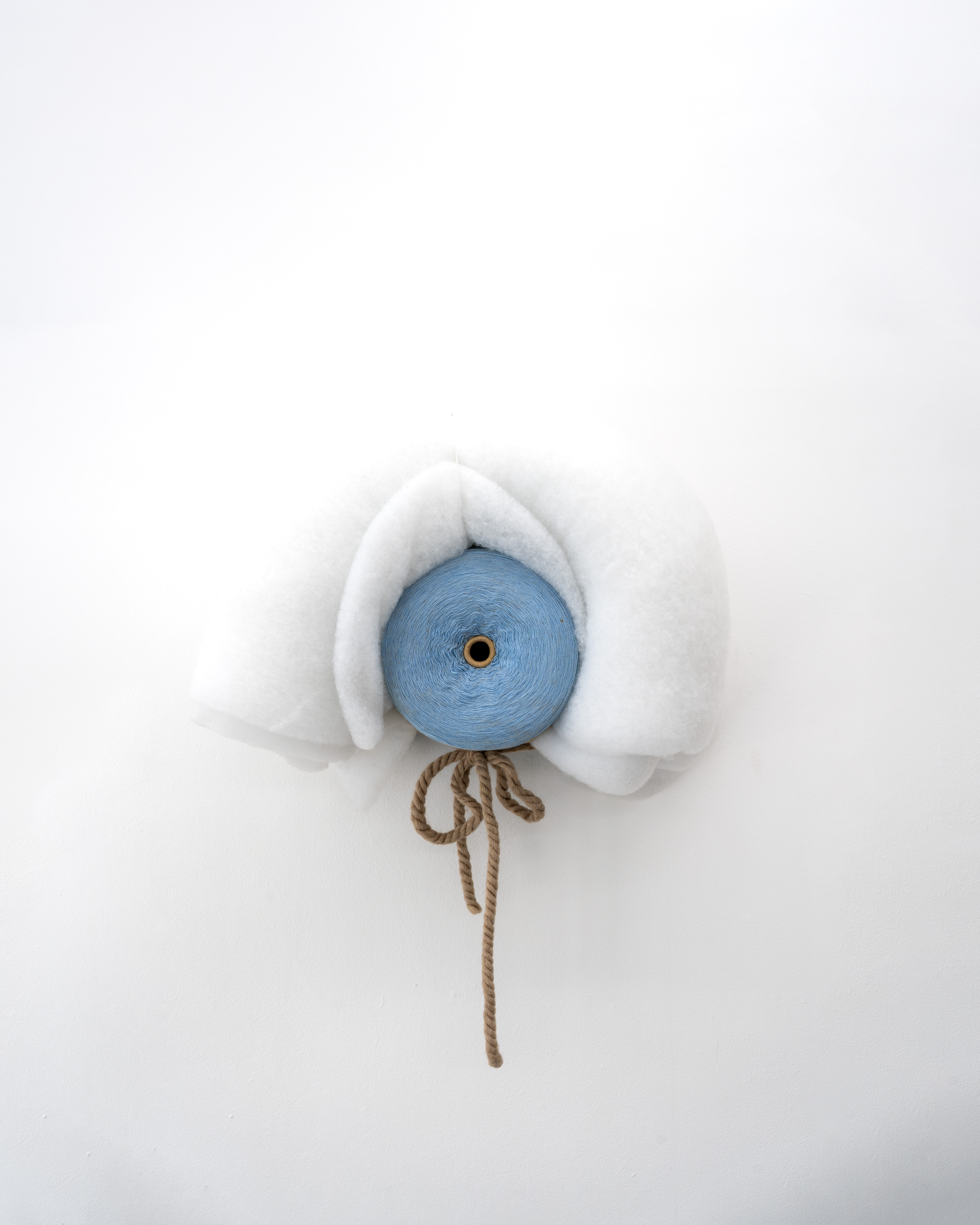
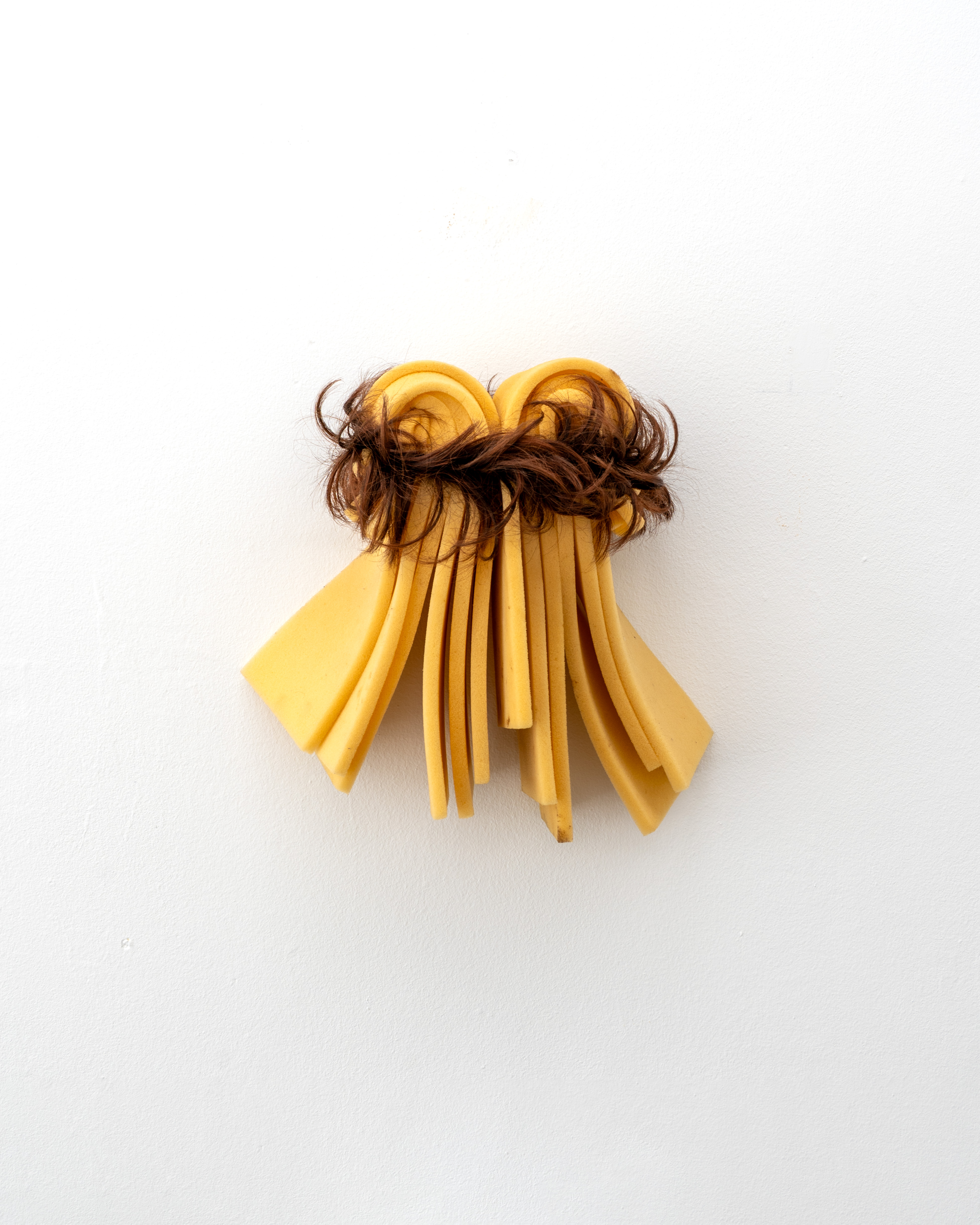
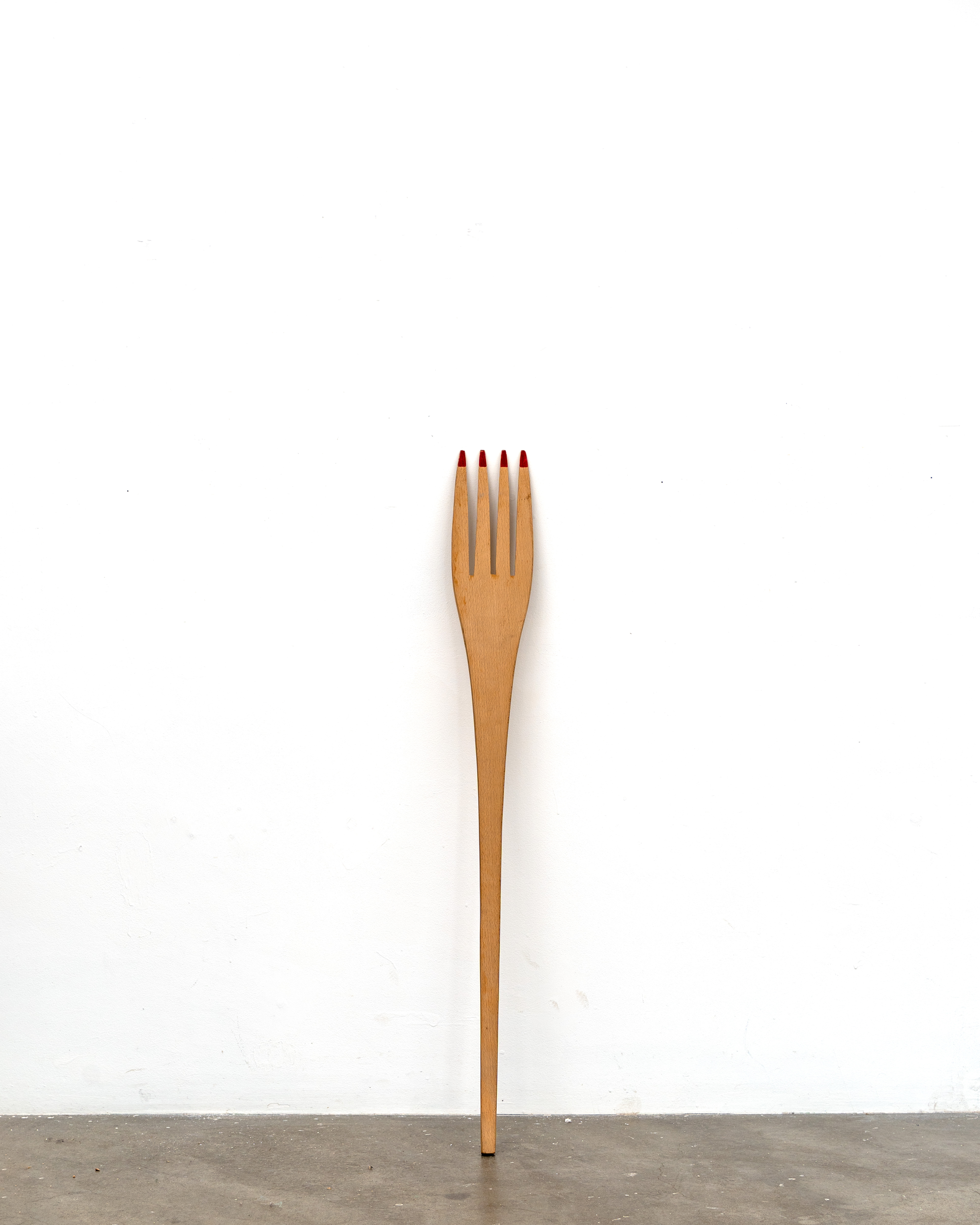
Those attending this exhibition are here – by hearing this, you’re confirming that – but where you haven’t been is at the creation of the artworks. You’re only seeing the end product. Artist Mark Manders says that looking at a drawing is like travelling through time. You can see the decisions made by the artist, unravel the choices they made, and understand how the final product came about. You can simply follow the pencil lines. However, this is more difficult when it comes to sculptures created through complicated transformation processes, such as casting aluminium, firing and glazing, making plaster moulds from silicone, and so on. Understanding something like this requires a certain amount of experience. Fortunately, this does not apply to Juan Pablo Plazas’ sculptures. His work is accessible even to the uninitiated, and one can see at a quick glance what has preceded it. His sculptures consist of assemblages of found objects, such as keychains, flat tires and brushes, and in that sense are three dimensional drawings. You can simply follow the internet cables, tramhandle, garden doorstop and electricity cable.
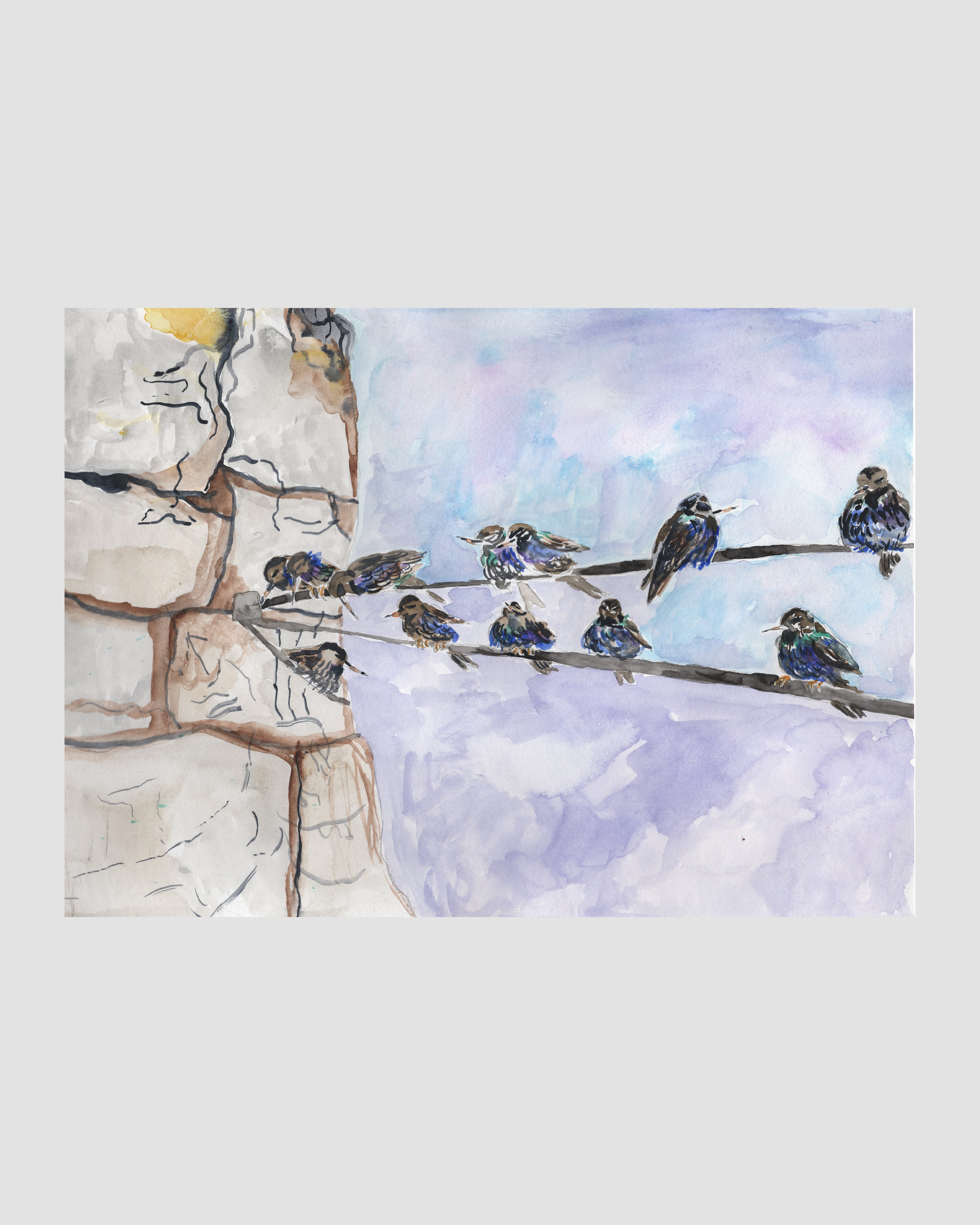
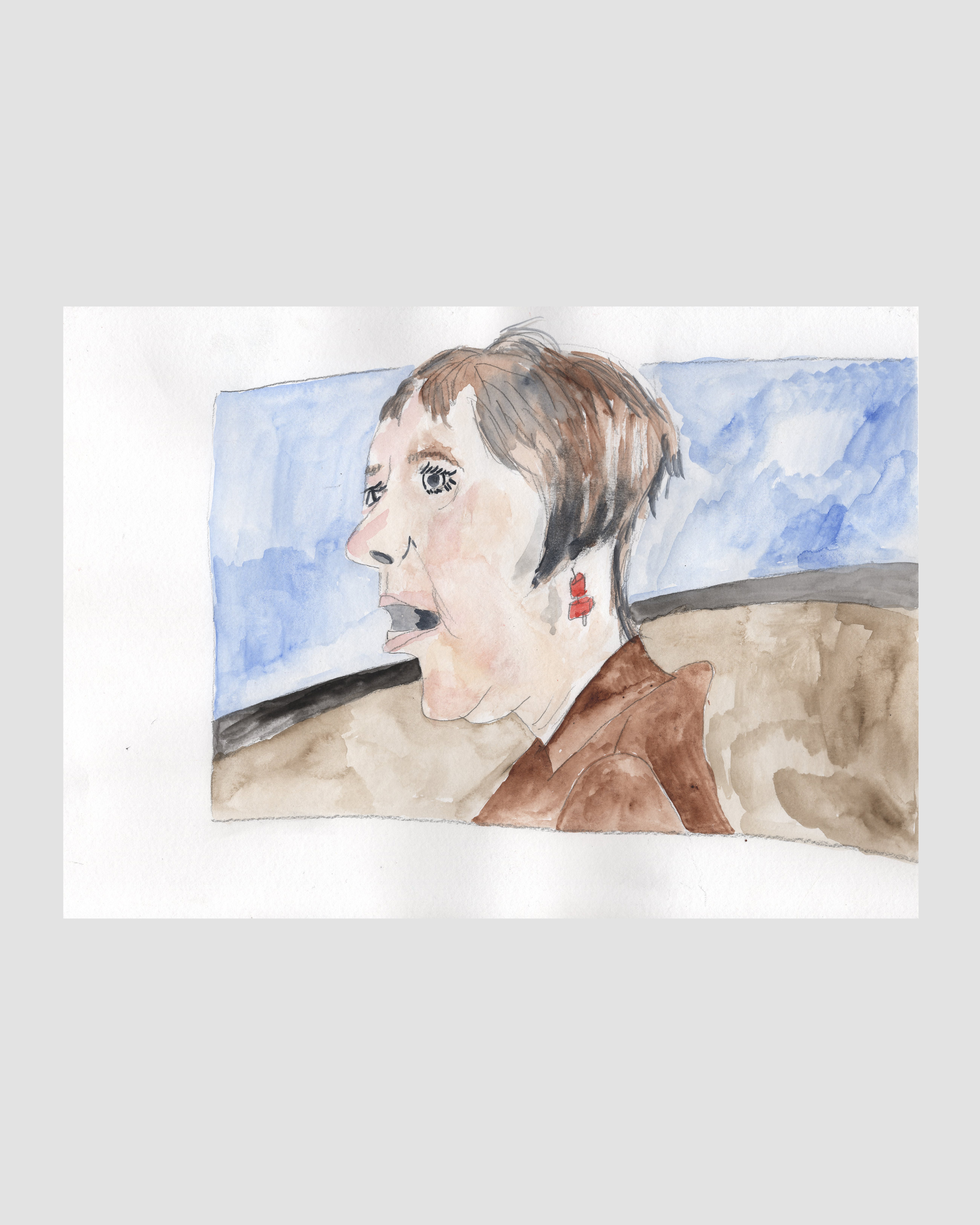
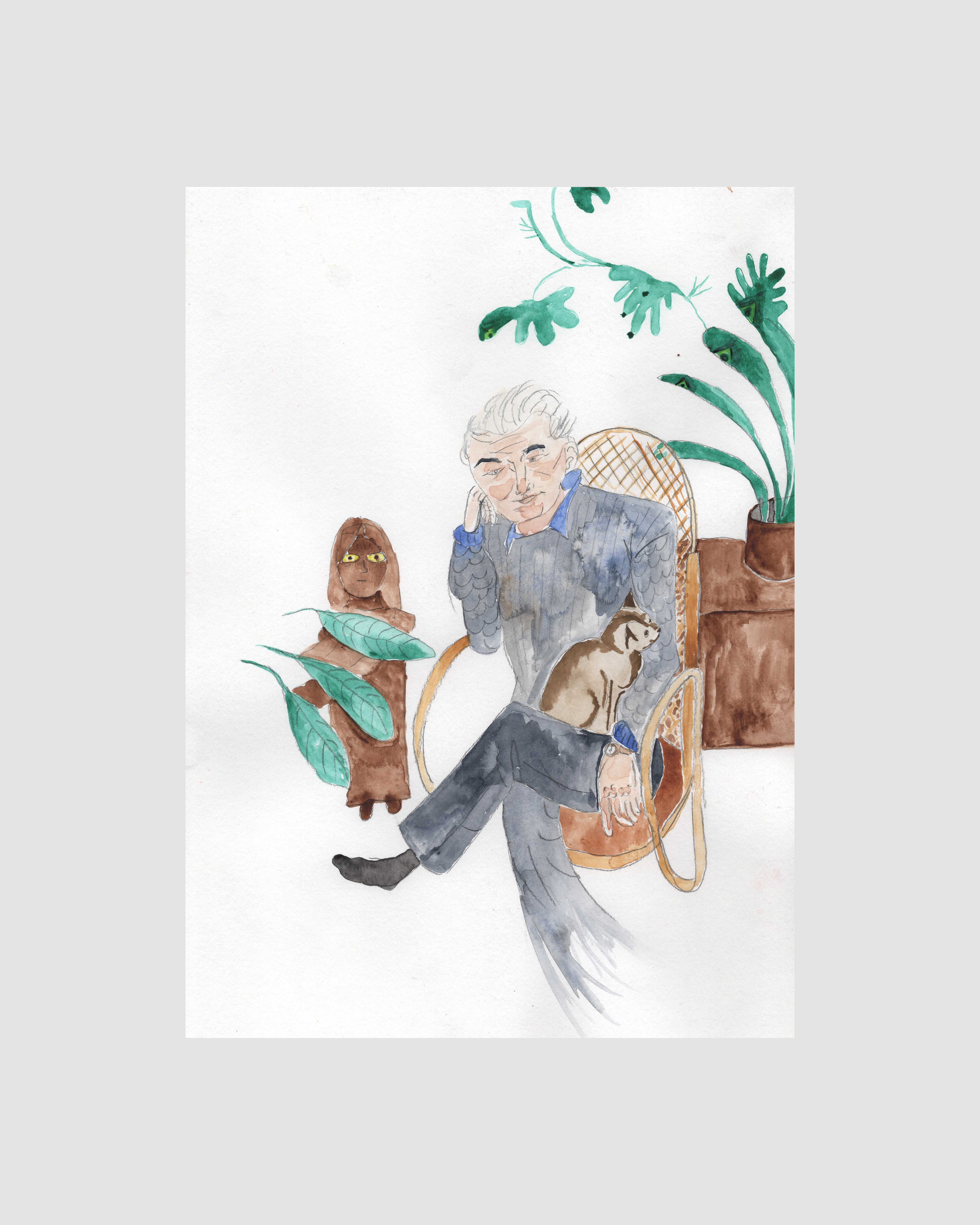
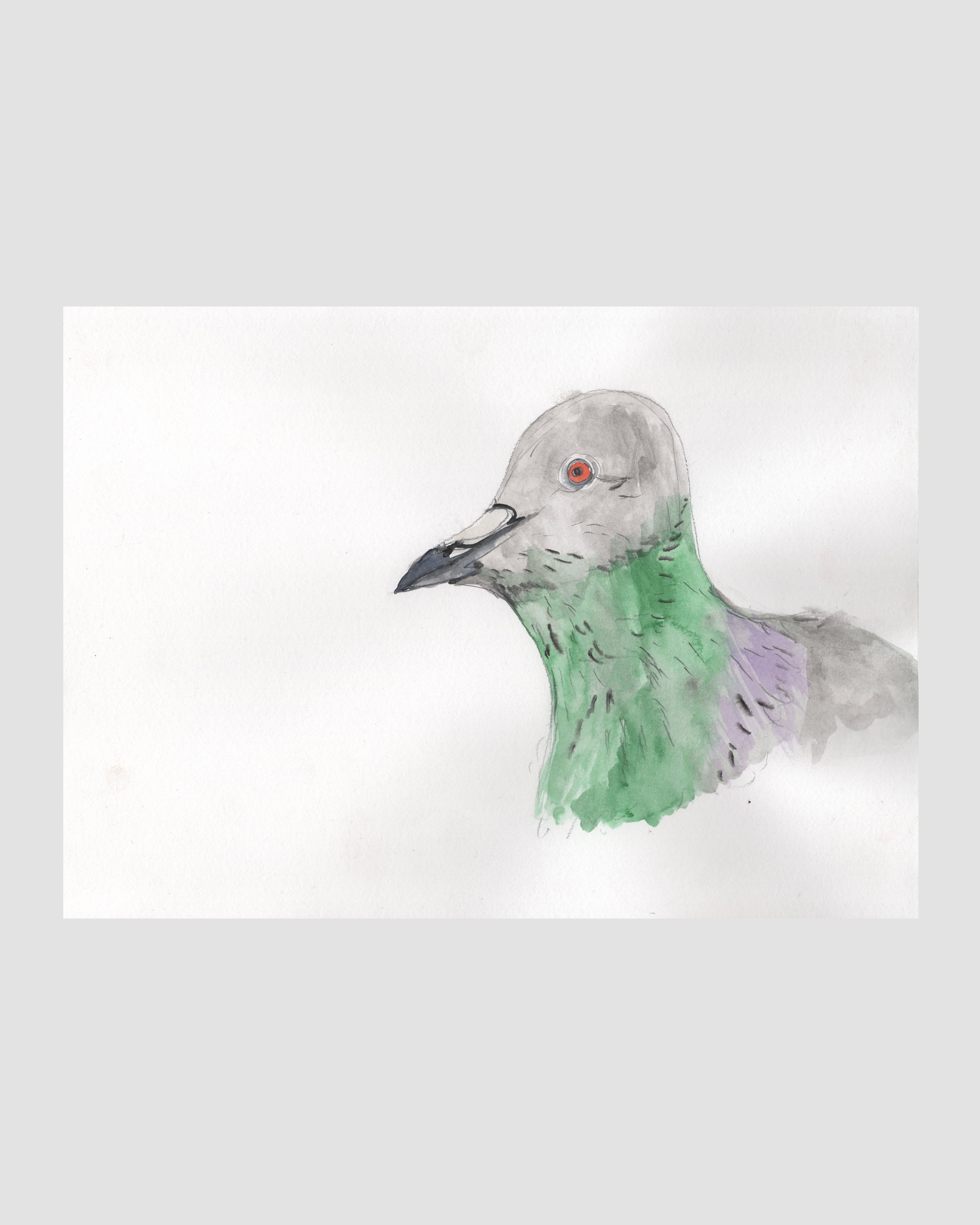
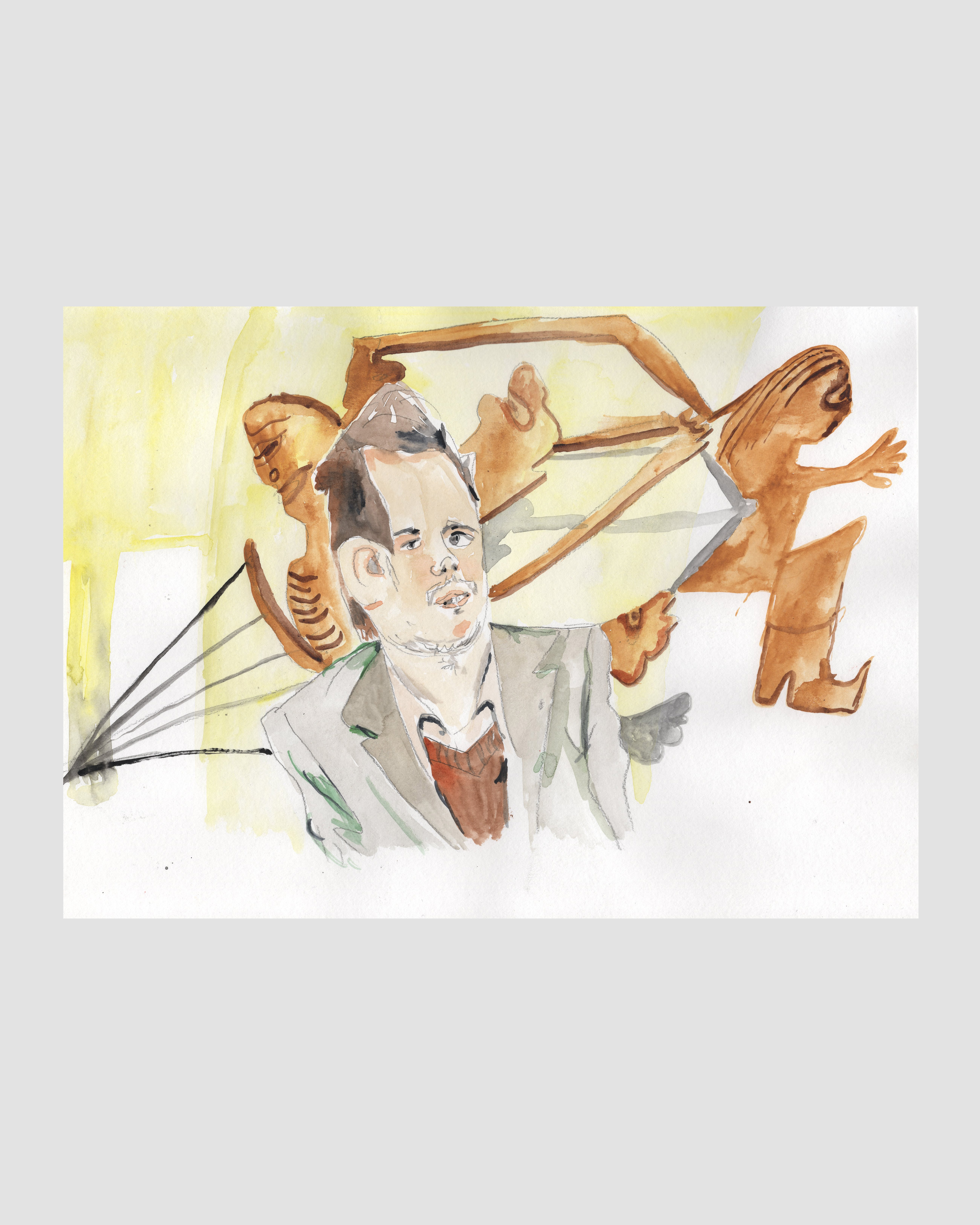
My desire, as the curator of this exhibition, in bringing together Juan Pablo Plazas and GC Heemskerk stems from the fact that, when creating exhibitions, both artists are capable of telling entirely new stories using (existing) work. Stories that surprise not only me, as a curator and artist, but – as they themselves admit – them as well. In fact, they do not know what will come either. They, too, discover along the way what the narrative might be this time. For instance, a sculpture by Juan Pablo Plazas turned out to bear a striking resemblance to the hairstyle of Mark Manders, who was portrayed by GC Heemskerk, whilst another sculpture seems to make a subtle reference to the somewhat sturdier-built wood pigeons amongst us. Whether this is a coincidence and what dialogue between the works emerges from this, we shall not reveal just yet; we’ll leave that to your own imagination.
The story we do wish to reveal now is that of The Baron. This 17th-century man wore, as was customary at the time, a large white wig. Through a twist of fate, this man had become lost in a large, dark cave. There was no one there, except for a colony of spiders. These spiders are known as the ‘no-eyed big-eyed wolf spider’, a species that came to live in this cave thousands of years ago because of the abundance of food. However, it was so dark that the spiders no longer needed their sight, and their eyes gradually disappeared through evolution.
What is remarkable about this cave is not only that it is home to spiders that have both large eyes and no eyes, but that it is the antithesis of this space (the thesis), a white cube on the Lijnbaansgracht in Amsterdam. The spaces are, so to speak, connectively parallel to one another, cutting right through space and time. Everything that happens here has direct consequences for what happens in the cave, and vice versa. Everything the spiders do to the Baron influences the exhibition here in the gallery. So that, ultimately, together they will produce a synthesis.
Because of the spiders’ blindness, they mistook their cobweb for the Baron’s wig. And they wove their web from it. The Baron did eventually spot a light source, and fate did indeed offer him a chance to escape, but he was absolutely unwilling to give up his wig. He simply refused. As a result, the Baron has, to this day, entered into a symbiotic relationship with the web and the spiders. Although the period in which the Baron initially lived – the early modern era – was the moment when the concept of the modern ‘subject’ came into being, he immediately dismissed it through his actions. He demonstrated that it is an untenable concept, because it is impossible to say where the Baron ceases to exist and where his wig, the web, or the spider begins. They are, so to speak, inextricably linked.
Back to the white cube, to the here and now. A direct consequence of the situation in the cave just described is that Juan Pablo Plazas spontaneously began writing a poem about spiders on the windows.
In a room
no windows
no wind
no light
only spiders can be found
Although you might think this poem is about the cave just described, that is not the case at all. The poem is actually about the white cube; a space that is usually empty for the vast majority of the time and inhabited solely by sweet little spiders. And I can already hear you thinking: What, exactly, is the difference between a Baron living in symbiosis with a no-eyed big-eyed wolf spider and a gallery owner who, in the year 2026, is kind and hospitable enough to offer us a place to shelter ourselves, and these works of art, but also provides harvestman spiders and cross spiders with accommodation completely and utterly free of charge?
The answer lies somewhere in between.